

Buying a Home in Breckenridge CO & Summit County: What You Need to Know Before You Search
Buying a Home in Breckenridge CO & Summit County: What You Need to Know Before You Search
Summit County is not like other real estate markets. The elevation is higher, the HOAs are more complex, and the rules around renting your property can change completely depending on which town, sometimes which street, you're buying on. Whether you're looking for a primary home, a mountain retreat you'll visit a dozen times a year, or an investment property that helps pay its own way, the things you need to know before you start searching are different here than anywhere else.
This guide covers the essentials. Read it before you start scrolling Zillow.
What Kind of Buyer Are You?
It sounds like a simple question but it changes everything. Summit County attracts three very different types of buyers, and what matters most to each one is not the same.
Primary residents are moving here full-time. They care about schools, community, year-round livability, commute to Denver (if applicable), and whether the property makes sense as a long-term home. They're usually less focused on rental income and more focused on lifestyle, space, and long-term value.
Second home buyers want a place that's truly theirs: somewhere to escape on weekends and for longer stretches in winter and summer. They care about location, access to skiing and trails, what the building feels like to stay in, and whether the HOA makes it easy or painful to use the place. Some want the option to rent when they're not there. Some don't.
Investment buyers are running the numbers. They care about STR licensing availability, HOA rental restrictions, tax rates by town, rental demand, and whether the carrying costs make sense against realistic rental income projections. For this group, the STR rules are not a small detail. They're the whole decision.
Know which category you're in before you start, and be honest if the answer is somewhere in between. It determines which towns make sense for you, which property types to focus on, and which questions to ask every agent you interview.
Property Types in Summit County
The inventory here is more varied than a lot of buyers expect coming in.
In the resort villages of Breckenridge, Keystone, and Copper Mountain, the majority of the market is condos and townhomes, many of them in larger HOA-managed complexes. These range from basic ski-town condos to full-service resort buildings with front desks, heated pools, ski lockers, and on-site rental management. Ski-in/ski-out properties exist in Breckenridge and Keystone and carry a significant premium.
In Frisco, Dillon, and Silverthorne, there's more variety. You'll find condos and townhomes alongside single-family homes, duplexes, and some land. These towns have a different feel: more primary residents mixed in with the second home crowd, and more traditional neighborhood-style properties alongside resort-focused inventory. Dillon and Frisco also have lake access properties, which is its own category with its own buyer pool.
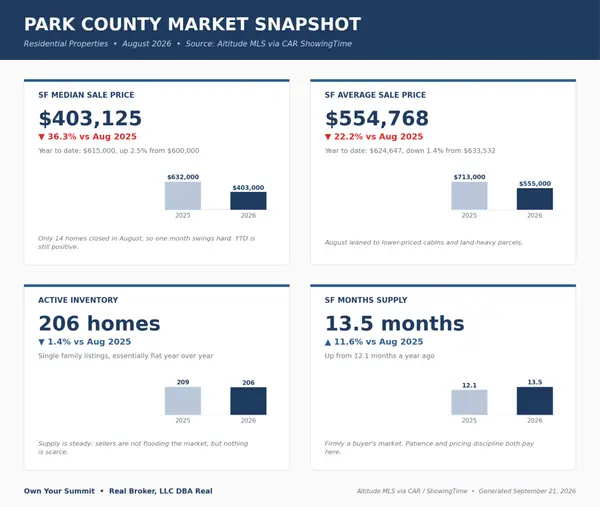
Blue River and Park County sit just outside the Summit County core and offer land, cabins, and single-family homes with more acreage and more privacy, often at more accessible price points than in-town Breckenridge.
STR Licensing Rules by Town: Read This Before You Fall in Love with a Property
This is the section most buyers skip and later wish they hadn't. Short-term rental rules in Summit County vary significantly from town to town, and making an offer without understanding them first is a mistake that can cost you real money.
Here's a summary where each town stands as of 2026:
Breckenridge uses a zone-based STR licensing system. The rules and availability vary depending on where in town the property is located. Some areas have caps, some don't, and licensing requirements differ by zone. On top of the town rules, individual HOAs at the building level can impose their own restrictions. Always verify the specific zone and current license availability for the exact property before making an offer.
Keystone has no cap on STR licenses and carries the lowest combined STR tax rate in Summit County at 8.375%. Keystone officially incorporated as its own town in February 2024 and now issues its own STR licenses directly. Licenses are non-transferable and do not convey with a property sale. The Keystone Neighborhood Company also collects a Real Estate Transfer Assessment (RETA) of 2% on every title transfer, which is negotiated in the contract.
Frisco caps STR licenses at 900, roughly 25% of its residential housing stock. That cap is currently full. As of early 2026, the waitlist runs approximately 9 to 10 months. Licenses are non-transferable. If you're buying in Frisco specifically for short-term rental income, you need to plan for the possibility that you won't be able to rent it right away.
Dillon has no cap on STR licenses, which makes it one of the more accessible options for investors who want to start renting immediately. The trade-off is that Dillon carries the highest combined STR tax rate in Summit County at 19.875%. Factor that into your income projections.
Silverthorne uses a zone-based licensing system with a total cap of around 740 licenses. As of late 2025, 422 had been issued. Availability depends on the specific zone and building. Licenses don't transfer with a sale.
Copper Mountain is primarily a resort development with a mix of condo buildings and townhomes. STR rules and rental program participation vary by complex. Some buildings work with third-party STR management companies, others have their own arrangements. HOA rules at the building level are critical to review.
The short version: do not assume that because a property is currently being rented short-term, you will be able to do the same after you close. The license does not transfer. Verify availability for the specific town and building before you're under contract.
For the full STR rundown check out this blog post: https://ownyoursummit.com/blog/Short-Term-Rental-Rules-in-Summit-County--The-Complete-Guide
HOA Documents: What to Actually Look For
Most properties in Summit County, especially in the resort villages, come with an HOA. That's not a bad thing. A well-run HOA maintains the building, handles insurance, clears the parking lot after a storm, and keeps the place feeling like a resort. A poorly run one hits you with a surprise special assessment two years after you close.
Before you go under contract on anything with an HOA, plan to review the documents carefully during your due diligence period. Here's what actually matters:
Rental restrictions. Does the HOA allow short-term rentals? Some buildings in Summit County prohibit STRs entirely, regardless of what the town allows. Some allow them with restrictions: minimum night stays, rental caps, and registration requirements. Know this before you write an offer.
Monthly dues and what they cover. Dues can range from a few hundred dollars a month to well over a thousand, depending on the building and what's included. Understand exactly what you're paying for: exterior maintenance, water, sewer, trash, amenities, building insurance, and what's not included.
Reserve fund health. The reserve fund is what the HOA uses to pay for major repairs and replacements down the road: roof, elevators, boilers, parking structures. An underfunded reserve is a yellow flag. Ask for the current reserve study and find out what percentage funded it is.
Special assessments. A special assessment is when the HOA charges owners extra beyond normal dues to cover a major expense. Ask whether there have been any in recent years and whether any are planned or anticipated.
Pet, parking, and renovation rules. If any of these matter to you, verify them in the documents. Don't assume.
Download our full HOA checklist here: https://ownyoursummit.com/hoa-checklist
Budget Beyond the Purchase Price
The sticker price is the starting point. Here's what actually comes out of your pocket:
HOA dues are an ongoing monthly cost that can add up fast, especially in full-service resort buildings. Make sure you're modeling this as part of your carrying costs, not treating it as an afterthought.
HOA transfer fees are typically charged at closing. The amount varies by HOA, so it's worth asking before you make an offer so you're not surprised at the closing table.
The RETA applies in Keystone and some Copper Mountain buildings. It's 2% of the purchase price and is negotiated in the contract to buy and sell. Budget for it upfront.
Closing costs for buyers in Colorado typically run 1% to 3% of the purchase price and include title insurance, recording fees, loan origination fees, prepaid property taxes and insurance, and HOA transfer fees.
Insurance for mountain properties, especially those in resort complexes, can be higher than what you're used to in a city. Get a quote early in your search so it doesn't surprise you.
Financing costs for second homes and investment properties are different from primary residences. Expect a higher down payment (typically 10% minimum for a second home, 20 to 25% for an investment property) and a slightly higher interest rate. If you're planning to use rental income to help qualify for the loan, work with a lender who knows how mountain properties and STR income are underwritten.
The Buying Process in Colorado
Colorado uses a contract-based system. Once you go under contract, you enter a due diligence period where you complete inspections, review HOA documents, secure your financing, and raise any objections to the condition of the property. That timeline moves fast. You're usually working with a window of about 20 days to complete all of this.
For out-of-area buyers, which is the majority of Summit County buyers, the process can be done entirely remotely. Video walkthroughs, electronic signatures, and remote closings are standard. What matters is having an agent who's physically here, who can get eyes on a property same-day, and who knows what to watch for in the documents so you don't have to.
Get pre-approved before you start seriously searching. Second home and investment property loans take longer to underwrite than primary residence loans, and you want that in hand before you find the right place.
What to Look for in an Agent
The agent you work with matters a lot in this market. Here's what to look for:
They're physically based in Summit County and working full-time. Not a Denver agent with a second home here. Not someone who works the mountain market as a side project. You want someone who is here every day, knows what's coming to market before it hits Zillow, and can get in a car and go look at something today.
They have experience with your buyer type. A primary residence buyer and an investor are shopping for different things. Make sure your agent actually works with clients in your situation regularly.
You can talk to them honestly. You're making a significant financial decision in a market you don't know as well as they do. The best agent is the one who tells you the truth about a property, including when it's not worth the price, not the one who just tries to close the deal.
Ready to Start the Conversation?
If you're thinking about buying in Breckenridge, Keystone, Frisco, Dillon, Silverthorne, or anywhere in Summit County, Emily Lawless and Betsy Repaske at Own Your Summit work with out-of-area buyers every day. They specialize in second home and investment property buyers and know the STR rules, HOA landscape, and local inventory across all of Summit County.
970-361-4553
emily@yoursummitcountyhome.com
ownyoursummit.com
This guide reflects information believed accurate as of June 2026. STR licensing rules, tax rates, and market conditions change. Always verify current rules with the relevant town and your agent before making any purchasing decision.
Frequently Asked Questions: Buying a Home in Breckenridge & Summit County
Can I short-term rent a home I buy in Breckenridge?
It depends on which zone the property is in. Breckenridge uses a zone-based STR licensing system, and the rules vary depending on where in town the property sits. Some zones have caps, some don't, and HOA rules at the building level can add additional restrictions on top of town licensing. Always confirm the specific zone and current license availability before going under contract on any property you plan to rent short-term.
Do STR licenses transfer when a property is sold in Summit County?
No. In Summit County towns including Breckenridge, Frisco, Silverthorne, and Keystone, short-term rental licenses are non-transferable and do not convey with a property sale. Every new owner must apply for their own license. If you're buying a property specifically for STR income and the town has a cap or waitlist, factor in that you may not be able to rent immediately after closing.
Which Summit County town is best for short-term rental investment?
It depends on your priorities. Keystone currently has no STR cap and the lowest combined tax rate in Summit County at 8.375%, making it one of the most accessible options for investors. Dillon also has no cap but carries the highest tax rate in Summit County at 19.875%. Breckenridge is a high-demand rental market but uses a zone-based licensing system with varying rules by location. Frisco is currently capped at 900 licenses with an active waitlist of roughly 9 to 10 months. Silverthorne uses a zone-based system with limited remaining availability in some areas.
What is a Transfer Tax and how does it affect buyers in Keystone?
A transfer tax is a tax negotiated between buyer and seller. Depending on the area you’re looking; it can be 1-2% of the purchase price. Keystone Neighborhood Company has a Real Estate Transfer Assessment as well. It's a 2% fee that applies to every title transfer in Keystone. Budget an additional 1-2% on top of standard closing costs when buying in Keystone, Breckenridge, or in some Frisco and Copper Mountain buildings that have similar transfer assessments.
What are closing costs like when buying in Colorado?
Closing costs for buyers in Colorado typically run 1% to 3% of the purchase price and include title insurance, recording fees, loan origination costs, prepaid property taxes and insurance, and HOA transfer fees. In Keystone and some Copper Mountain buildings, budget an additional 2% for the RETA on top of standard closing costs.
What HOA questions should I ask before buying in Breckenridge or Summit County?
Ask these before you go under contract: Does the HOA allow short-term rentals, and are there building-level restrictions beyond town licensing? What are the monthly dues and exactly what do they cover? What is the reserve fund balance and how well is it funded? Have there been any recent or upcoming special assessments? What are the rules on pets, parking, and renovations?
Can I buy a home in Breckenridge or Summit County remotely?
Yes, and it's common. A large portion of buyers in Summit County are out-of-area and purchase without ever walking through the property in person. A good local agent will provide detailed video walkthroughs, flag local nuances that don't show up in listings, and walk you through the HOA documents. Get pre-approved before you start searching, and know that Colorado's due diligence timeline moves quickly once you're under contract.
What's the difference between buying a primary home and a second home in Summit County?
The biggest differences show up in financing and property use rules. Second home and investment property loans have stricter qualification requirements than primary residence loans. Expect a higher down payment (typically 10-25%) and slightly higher interest rates. If you plan to rent the property, lenders will classify it differently depending on how often you use it personally. Talk to a lender experienced with second home and mountain property purchases before you start. Check out this blog post by Brandon Doza about financing a STR: https://ownyoursummit.com/blog/financing-short-term-rental-properties-in-summit-county
What types of properties can I buy in Summit County?
Summit County has a wide range of property types. In the resort towns like Breckenridge and Keystone, you'll find ski-in/ski-out properties, resort condos, and townhomes. In towns like Frisco, Dillon, and Silverthorne, there's more variety: condos, townhomes, duplexes, single-family homes, and some land. Lake Dillon adds a category of waterfront and lake-view properties. The Breckenridge area also includes Blue River and Park County for buyers looking for more land and lower price points.
How does the home buying process work in Colorado?
Colorado uses a contract-based system with a defined inspection and due diligence period. Once you go under contract, you have a set window to complete inspections, review HOA documents, secure financing, and raise any objections. That timeline moves fast, especially in a mountain market where inventory is limited and good properties don't sit long. Have your financing lined up before you start searching.
What should I look for in a real estate agent in Breckenridge or Summit County?
Look for someone physically based in Summit County, working full-time, with specific experience in the town and property type you're considering. They should understand HOA structures and what to watch for in the documents. And they should have real experience with your type of transaction, whether that's a primary residence, a second home, or an investment property.
Categories
- All Blogs (107)
- Breckenridge (19)
- Buying a Home (36)
- Expired to Sold (2)
- Featured Listings (4)
- Frisco (1)
- Home Maintenance (8)
- Keystone (9)
- Lender Updates (7)
- Local Agent Guides (6)
- Local Businesses (10)
- Market Updates (15)
- Mountain Lifestyle (18)
- Park County (5)
- Selling a Home (15)
- Short Term Rentals (4)
- Summit County (73)
Recent Posts




GET MORE INFORMATION