

How Filing Your Taxes Can Impact Your Mortgage Approval
If you're self-employed or own a business, how you file your taxes can have a major impact on how much home you qualify for. Every year around tax season, I have conversations with business owners who say: “I wrote off a lot this year, that’s good for taxes… right?” Maybe. But if you’re planning to buy a home soon, it can also significantly reduce the income a lender can use to qualify you. Let’s break it down.
Why Tax Returns Matter So Much for Self-Employed Borrowers
If you’re a W-2 employee, qualifying income is pretty straightforwardm we look at your paystubs and W-2s. If you're self-employed, lenders typically use:
● Your last two years of personal tax returns
● Your business tax returns (if applicable)
● A two-year average of your net income
And here’s the key: We qualify you based on your net income after expenses, not your gross revenue.
Established Businesses May Qualify Using Just One Year
Here’s something many business owners don’t realize: If your business has been operating for five years or more, and your income is stable or increasing, we can often use just the most recent year’s tax return for qualifying purposes. That can make a big difference. If your income dipped two years ago but rebounded strongly last year, you may not be penalized by averaging in that lower year. This is one of the reasons it’s important to talk to a lender who understands self-employed income; not all loan officers structure these files the same way.
The Problem With “Writing Off Everything”
Many business owners do what their CPA advises, reduce taxable income as much as possible. This lowers your tax bill (which is great). But when your Schedule C, 1120S, or K-1 shows low net income, that’s the number underwriting starts with. So if your business made $300,000 in revenue but shows $60,000 in net income after expenses… The lender sees $60,000. That can dramatically reduce your borrowing power
What Can Be Added Back to Your Income?
Here’s the good news: not all write-offs hurt you. There are certain expenses lenders are allowed to “add back” because they’re considered non-cash or one-time expenses. Common add-backs may include:
✔ Depreciation
Depreciation is an accounting method that spreads the cost of equipment, vehicles, or property over time. Even though it reduces your taxable income, you didn’t actually spend that money in the current year so lenders can typically add it back to your income.
✔ Business Use of Home
If you deduct a portion of your home expenses (like utilities or mortgage interest) for a home office, this is often just an allocation for tax purposes — not a new cash expense. In many cases, it can be added back.
✔ Amortization
Similar to depreciation, amortization spreads the cost of intangible assets (like startup costs or certain loans) over time. Because it’s a paper expense rather than a cash outflow, it’s often added back.
✔ Depletion
Common in industries like mining, oil, gas, or natural resources. Depletion accounts for the reduction of a resource over time. Like depreciation, it’s a non-cash accounting deduction and may be added back.
✔ One-Time Expenses
If your business had an unusual, non-recurring expense (for example, a one-time legal settlement or large equipment purchase), and it’s clearly documented as non-recurring, it may be added back. However, this requires strong documentation and underwriter approval.
What Usually Cannot Be Added Back?
This is where people get surprised. Expenses that typically cannot be added back include:
● Vehicle payments
● Fuel and mileage
● Meals and entertainment
● Payroll
● Advertising
● Cost of goods sold
● Actual operating expenses If you spent the money, and it’s a real recurring expense, it generally counts against you.
Why Planning Ahead Matters
If you're thinking about buying a home in the next 12–24 months, it’s important to plan strategically. Sometimes that means:
● Showing slightly more income for a year
● Being cautious about large write-offs
● Understanding how this year’s return affects next year’s buying power
I’m not saying you should pay more taxes than necessary. But I am saying that tax strategy and mortgage strategy should talk to each other. The year before you buy is not always the year to aggressively minimize income.
Real Example
Let’s say:
● Business revenue: $250,000
● After deductions, net income: $70,000 You might qualify for roughly what a $70k income supports.
But if net income showed $110,000 instead, your qualifying power could increase significantly sometimes by hundreds of thousands of dollars in purchase price. That’s a big difference.
Colorado Business Owners:
Let’s Be Strategic If you’re self-employed and even thinking about purchasing in the next couple years, I recommend:
1. Reach out before filing your taxes.
2. Let’s run a qualification scenario.
3. Then coordinate with your CPA if adjustments make sense.
It’s much easier to plan ahead than to fix a tax return after it’s filed. That can involve re-filling and having to pay taxes before you can close on a home.
Final Thoughts
Your tax return tells a story. When it comes to mortgages, that story determines how much you can borrow. If you're a business owner, entrepreneur, 1099 contractor, or real estate investor don’t assume your income works the same way as a W-2 employee. Building a strategy and plan that protects both your tax strategy and your homeownership goals is a great way to prepare yourself for your future.
| Brandon Doza Mortgage Loan Officer MPA Home Loans (970) 389-2278 Apply Now brandon@mpahomeloans.com HomeLoansWithBrandon.com Schedule a Call LinkedIn | Instagram NMLS 1991912 Start your home loan journey today
|
Categories
- All Blogs (106)
- Breckenridge (19)
- Buying a Home (36)
- Expired to Sold (2)
- Featured Listings (4)
- Frisco (1)
- Home Maintenance (8)
- Keystone (9)
- Lender Updates (7)
- Local Agent Guides (6)
- Local Businesses (10)
- Market Updates (15)
- Mountain Lifestyle (17)
- Park County (5)
- Selling a Home (15)
- Short Term Rentals (4)
- Summit County (72)
Recent Posts

Colorado Appraisals Just Changed. Here's What Sellers and Buyers Need to Know.

What's Happening in Summit County This November

7 Things Sellers Are Doing That Only Worked When There Were 10 Offers

What's Changing With Condos, HOA Rules, and Lending in Colorado

The Fed Raised Rates Again — What It Means for Buyers and Sellers

Local Business Spotlight: Wandering Daisy in Breckenridge
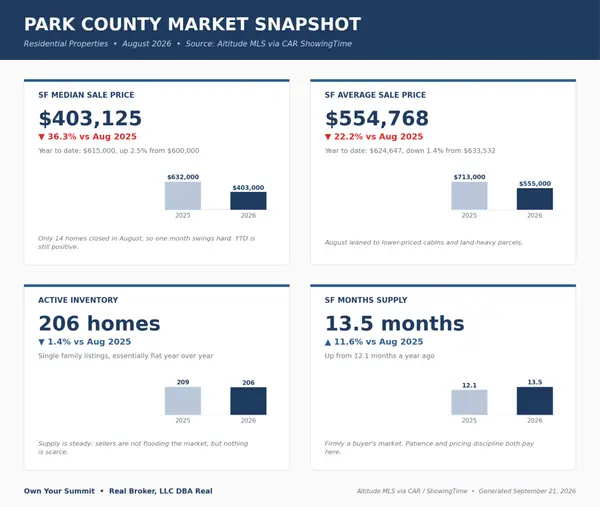
Park County Real Estate Market Update: August 2026
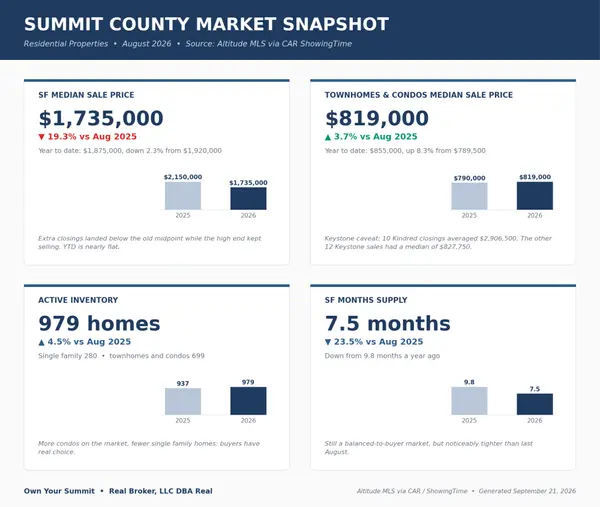
Summit County Real Estate Market Update: August 2026

What Happens After Your Offer is Accepted in Colorado: A Buyer's Guide to the Contract Timeline

Frisco vs. Keystone vs. Breckenridge: Which Summit County Town is Best for a Short-Term Rental?
GET MORE INFORMATION